
Country in the city part 1: kitchen planning.

People say the kitchen is the biggest renovation project of the home. And hence the most taxing. But i must confess that i have found our kitchen re-fit to be a thoroughly enjoyable 4-week experience. Our joiner, who did a very impressive job of putting up with all my pedantic requests, has officially signed off today. And so i bring you the two part story of how we did it.

Here was our starting point. Something reminiscent of an intergalactic space station. Blue walls, silver cabinets (a total of 2), garage shelves, grey linoleum. Need i say more. So we got to work dreaming and designing our ideal cookery nook after a few weeks of moving in, having tried but failed to make friends with the existing Nasa creation. Our budget wasn’t huge, so a complete rearrangement of the layout wasn’t really an option. Thus we worked with the existing structure, without having to move pipes or boilers, and focused on adding careful detail and functionality to suit our tastes.

Strangely enough, choosing the style was the easiest bit. I was hoping to create a country kitchen, so shaker-style cabinets, solid oak worktops, wooden floor, ceramic sink were all obvious choices. Our local swedish flat-pack store did all the above at considerably less cost than its competitors. And although there wasn’t much in the way of help with the design, we got a lot of ideas from their showroom, as well as my indulgent stack of Country Living magazines. Working out the layout was much more tricky, but Malkie got to grips with the measuring tape and formulated all our options. That engineering degree came in handy after all. Soon we were cabinet experts and taking about 92s like they were old friends. (Extra-tall height option, for the uninitiated).

The grapevine had reliably informed us that it was advisable to avoid certain Ikea things, in particular anything with moving parts eg internal carousels. And the taps, which leak. And the appliances. We had our hearts set on a larder cupboard, and an eye-level double oven. But then we remembered that our mothers had told us you can’t have everything, so we settled for the basics but made sure we carefully planned a range of storage solutions to accomodate my vast collection of superfluous vintage kitchenalia.

The kitchen shape, being classically edinburgh-ian, wasn’t square, in fact not even close to square. So this flummoxed us for a while, especially as i relentlessly tried to integrate all sorts of odd-ball fixtures collected over the years, eg a wonky plate rack, and add in lots of shelves everywhere to display all my ‘trumphry’, as my granny would say. At least this was a step down from my original vision, which was to fit a basic, possibly free-standing kitchen, and add in welsh dressers and the like around it in a haphazard and completely impractical fashion. But then I realised that would have zero re-sale value, and so i compromised by throwing in plenty of hand-made bits for good measure to compliment the standard cabinetry on offer in the aforementioned local swedish flat-pack store.

However, our troubles with our parallelogram kitchen was nothing compared to the consternation and sheer puzzlement we were met with when arriving at Ikea with…..wait for it…..drawings!! I mean, drawings!! Ikea rely on some sort of unworkable on-line kitchen planner, into which you input your cabinets by the proverbial drag-and-drop. Fine for the kitchens that are geometrically inclined, but not ours. We were then officially excluded from the office while Brian (I still remember you dear Brian) attempted to input our carefully worked drawings into the computer by his own sheer guesswork and interpretive surmise. After a series of begrudging adjustments to our order, delivered with a healthy disdain, we walked away with our £2500 worth of merchandise.


On December 4th we moved out and the joiner moved in. The Hewitts and the Heenans put us up/put up with us for 2 weeks whilst the bulk of the re-fit was undertaken. After several drafts, i came up with these rather pleasing yet sadly pedantic drawings.

So here we are mid-way. How i rejoiced to see that old kitchen sitting disconsolately in the rain outside our flat. However I hope it will be happy doing its duty in its new home in the shed at Blackridge.

We moved back in just before departing for Christmas in The Province, leaving the painters to apply my risque ‘brushed clay’ paint choice and classic subway tiles with grey grout. Its all the rage, if you’re on Pinterest. Or even if you’re not.

Part 2: the finished result, en route to you shortly….. (when i have edited the photos to make them look 10 times better than the originals. Have you ever noticed that’s what all these fancy ‘before-and-after’ websites do?)



Festive Friends

Well hello Blogosphere. It’s been too long. But thats ok. My new years resolution is to be thankful for the things that distract us. Because they are probably worthwhile. Getting frustrated over not having time to read ‘The Week’ or ‘Style’ magazine is even less productive!

You need to share in the revolution of paper snowflakes. It started with a little festive gathering of friends and turned into Crafty craic. There were doubters. There were those who feared the shame and denied their inner crafter. But all were overcome when the admiration came rolling in, as these free and floaty paper creations hung in their festive foray.

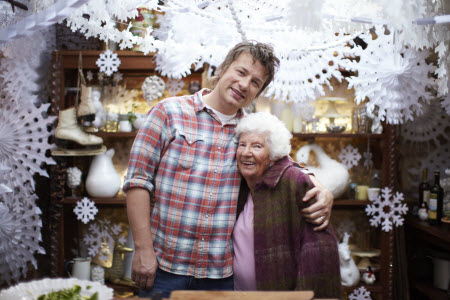
When Jamie Oliver presented his Christmas show beneath a swathe of paper snowflakes i vowed i would find a way to cook my christmas dinner in similar snow capped surroundings..

I managed to kick things off by finding some large paper snowflakes online, and stumbling across this spectacular online shop in the process called ‘RE’. Says it all really. Probably one of the best virtual shopping experiences you’ll have. Beautifully laid out, user friendly, experiential website. The snowflakes are in ‘gREetings’, and I think I’ll carry on the paper fad all year with the star light shades in ‘REcycle’.

So armed with mull and gossip, we used this tutorial http://www.wikihow.com/Make-a-3D-Paper-Snowflake. The only point you can go wrong is when you make the cuts. Always follow the diagonal line. You’ll only do it wrong once!


Get folding


Focusing on the prize

a doubter converted

craft by candlelight

Plenty of snacks..

Santa hat brownies

I personally really like this version hanging in a window..

We were on a roll, magazine christmas trees.

Magazine trees

Just how I imagined it. Other people making my Christmas lunch in the snow studio.

happy helpers

If you master that, the wonderful Jenny over at ‘Silver Spoon Society’ has taken it up a gear by suggesting this tutorial on pinterest, thanks Jenny!

And a happy new year to you all!


Crafty gifts

With the flat in turmoil owing to the kitchen refit during december, the elements weren’t conducive to a handmade christmas. So it was that for the first year in a long time, we had no tree, no wreath, no mark of christmas cheer in the flat. In fact, we were lucky to get a cup of tea at home for about 3 weeks. However it wouldn’t quite be christmas for me without a few crafty presents for family. Following the success of my recent hot water bottle covers, i couldn’t resist doing the same for the wider Calvert hot-water-bottle appreciation team. Helen and my mother-in-law were the recipients of these two new designs.

This one was a welcome opportunity to use some of my Liberty fabric, which is in short supply but getting a bit sad being as yet un-used in any project thus far. Its too good! The mustard velvet was picked up in a charity shop in York, which i then quilted. The labels are parcel tags printed with stampers from one of my favourite stationery companies, Cavalllini & CoThis one I gave to my mother-in-law. The fabric is from John Lewis, and finished off with a vintage button.
My niece (and namesake) Lucia loves to bake. I came up with this ridiculously easy apron design, involving the corner of a vintage embroidered tablecloth. Fast track to making one look amazing at embroidery, yet having no idea how to, or indeed inclination to, actually embroider.

I did do the text in freehand embroidery on the machine. Easy when you have the special attachment. 
Pity Lucia left her apron at home on New year’s eve when we made homemade pizzas. She had to make do with mummy’s geniously improvised Tesco bag. I guess the ‘danger of suffocation’ issue was not so much of a problem with holes for little girl’s heads!

The blind leading the blind

Over the years i have built up a reasonable sewing repertoire of quilts, bags, organisers and other handy household items. However when it comes to one simple aspect of sewing, namely doing so in a long, straight line, i wouldn’t say i am particularly accomplished. Its the tedium of measuring and marking out that doesn’t appeal. So where possible, i cut straight lines by using existing selvedges to roughly guide me, and other contraban methods for cutting perpendicularly, where squares or rectangles are required. So, if i had known how many straight lines would need cut and sewn, and how integral this would be to the functionality of the item, i might not have embarked upon my most recent project, a large roman blind for the guest room.

When doing an unfamiliar project, i try not to buy new material for it in case its a complete disaster. The only suitable material i had in terms of size, weight and stye had previously been made into a quilt. Not a very good quilt though, so i was happy to pull it apart again, although i did have to sew a few odds and ends together in order to have a large enough piece for the main body of the blind.

I dug out various bits of plain white cotton and stitched them all together to make the backing. I used this tutorial for the instructions, and was glad i did as it’s not a very intuitive project. Hurdle number one is making the basic blind fit the window. This occurred almost certainly by chance on this occasion – as stated this kind of thing is not my forte. Then, i made casings for the dowels. Next comes the tricky bit…marking out where the casings go. So not only does each casing need to be sewn on straight as a die, to accomodate the dowel, but also horizontal as [other suitable simile] so that the drawstring mechanism works. Marking chalk and a long piece of wood are essential here.

The next stage is attaching the fabric onto the top wood support. I used a staple gun but you could attach it with velcro too.I then realised i needed blind rings and decent string so there was a small interlude in proceedings whilst ebay was consulted. The rings need to be sewn by hand, at least 3 per dowel, which is a bit arduous (i hate hand sewing), then eye hooks are aligned with each row of rings and attached to the top wood piece. Buying individual wooden dowels tends to push the price up, so instead i used plastic-coated bamboo from Homebase at £5 for the lot. And then, the moment of truth….

.…and the bit where i realised how essential the measuring accuracy was. If you look closely, you will note that the bottom dowel is at an angle to the rest of them. This is because of my school-boy error whereby i measured each strip against the one above thus losing around 4 cm by the bottom end of the blind. So when pulled up it all looks a bit wonky.

Furthermore, though the fabric looked quite heavy, as you can see it definitely is a long way from black-out!

On the up side, when all bunched up it looks pretty good and the layering turns out to be quite forgiving of all my inaccuracies.

In hot water

After a few months of living in our new place, we can definitely say that warmth is a slight issue. Being ground floor, with huge single-glazed windows, draughty doors and little else in the way of reasonable insulation, makes for a chilly environment. On the up-side, we have been embracing nostalgia and getting back into good old hot water bottles. According to a reliable source, usage in general is on the increase in Britain, with subsequent escalation of scalding incidents. However, apparently hot water bottles are still not very ‘fashionable’.

But someone at the Guardian makes an excellent case for the bottle: “With an adequate cover (and would you seriously consider a naked rubber bottle?), it keeps you warm into the small hours. And then there is the attendant ritual of decanting a boiled kettle; lightly burping the bottle, and screwing the cap reassuringly tight. To do this is to feel somehow parental, wise – as if providing for your inner child.”

In other trivia news, we once had a guest staying at Hailes Street who was in great need of a bottie. After an earnest moonlight search, she came across my expanded collection of antique ceramic ones and subsequently used one in her bed. I think it was an anguished night’s sleep, in fear of a sudden cracking or leakage drama. As i recall, none such event occurred, and many thanks to Bre for testing it out. I had always wondered…..

My sister-in-law Helen is a knitting extraordinaire, and made me this lovely cosy cover last year over the christmas holidays.

Meanwhile poor Malkie was having to make do with an inglorious naked bottle for the first few weeks of our hottie revival between the sheets. So i set about designing and making a suitably masculine cover.

The material was originally the reclaimed lining from a very ugly coat. This meant that supply was limited which i have decided was mostly to blame for the phase one error in production which resulted in the top section being too narrow to fit the ‘spout’ of the bottle. As stated before, sewing projects are generally made up as i go along, but this method can have it’s advantages, namely the opportunity for unexpected product improvement. (If you are not into this kind of ad-hoc seamstressing, LIsa Stickley does a nice tutorial here.)

I cut the initial faulty top section off and made a new wider piece complete with lid and fastener. I changed the alignment of the fabric and was able to sew on more binding (which i couldn’t do as planned around the main body edges as it was already a bit too neat-fitting).

I quilted along the lines of the fabric in the main body, and used leftover wadding from some recent patch-working to insulate. The toggle was also salvaged from the original coat, and definitively sets the cover apart as a Malkie item. (Loves a good toggle button, he does.)

So without any particular planning, this project, made entirely from salvaged or left-over materials, turns out to be of practical design, boyish, and surprisingly fit for purpose. Unlike most of my other sewing projects on all 3 counts….

Chutney 101

Its been quite a long time since i made chutney. A bare chutney cupboard in my life is a sure sign of general busy-ness. I then discovered that Malcolm, en route to work, had been purchasing shop bought chutney for weekday lunches. Oh, the shame! The ignominy! So i got to work with the help of Hugh F-W and his excellent book.

I decided to start the season with a simple tomato, chill and apple recipe. I would generally caution people not to lift any old recipe off the internet, i have had some bad luck myself and now only go for reputable sources. One key thing to look out for is the sugar/vinegar ratio. They need to be fairly close in quantity (mls and grms) otherwise i doubt the chutney would turn out well rounded. You can substitute stated fruit/vegetables for anything really as long as the ratio to sweet and spice stays the same.

Here’s my lovely batch simmering away. I used to use an aluminium pan but i upgraded to stainless steel and haven’t regretted it, as i noticed the old one started to taint the flavour of my preserves. I was listening to Woman’s Hour at the time so it all felt very feminine and worthy.

I also would recommend a jam funnel. I used to think these things were all gimmicks but it makes a big difference to bottling/jarring. Everything needs to be well sterilised too, i have made that mistake before and produced a batch of mouldy onion marmalade. Never again!

So here’s the first gleaming and wonderful 6 of the season. That should last Malkie about 6 weeks in total….

Sink Skirt

Two things i find difficult to look at – ugly pipes and untidy leads/cables. So this little sink in the WC wasn’t filling me with joy every time i sat down to do the necessary. (Not to mention the awful kitchen taps). Being right in front of the toilet, i was able to sit and study it in some detail since we moved in, in order to figure out the best way to hide the exposed plumbing.

Whilst the room itself was clearly decorated on a cheap and cheerful budget, i really like the white tiles and grey grout – kind of ‘subway’ style. Plus the black and white theme running throughout. I wanted to upgrade the look a bit and figured this would be an ideal place to introduce some Jouy de Toile fabric in similar colours. I found some lovely charcoal grey fabric on ebay and set about designing what i came to discover was called a ‘sink skirt’. With no frame to hang fabric on, i researched stick-on options and came up with this ‘heavy duty’ velcro, which i am told in good faith that once stuck on, it isn’t likely to come off.

All skirts need a bit of ruffle so i dug out some thick black elastic i had tucked away. Im not really sure about sewing elastic so like most of my sewing projects, i was making it up as i went along. Luckily I discovered in time the elastic zig zig setting on the machine which allows the elastic to return to its former state after it has been sewed fully stretched, thus resulting in a pretty row of even ruffle.  I decided the black made a nice contrast edging so put it on the front rather than hidden away at the back.

Next i attached some velcro along the ruffle to attach to the sink.


The ‘heavy duty’ velcro goes onto the sink, and hey presto! A fancy sink skirt….
Not satisfied with one sink skirt, i decided to ditch the generic white cupboards and add another skirt in the main bathroom. This fabric off-cut was 50p in charity shop, its got a slight sheen so is nice and waterproof for our steamy bathroom. In time i’ll introduce the fresh green colour a bit more into the room.

Seeing the light

Every once in a while i come across something in a charity shop that makes all the rifling through endless tat worth it. Such an occurrence happened last week when i came across this lamp in a YMCA charity shop i rarely frequent.

Anglepoise have been making lamps since the First World War and more recently have reproduced their original ‘1227’ design lamp in celebration of British design. I was quite taken by said lamp whilst browsing in John Lewis and had even considered forking out the required £150 on one. A few trial twists and turns, up and downs, and you will soon realise why these are designer lamps. They don’t droop, squeak or labour; they are built with lots of little springs and levers in all the right places to make their movement seamless.

So, when i spotted what i immediately recognised as a classic Anglepoise desklamp for £5, i swooped upon it with a look of smug pride and duly delivered my note to the shop assistant. My conscience did consider giving a larger donation, given that i knew it was worth maybe £100, but then i rationalised this by concluding that i am propping up many a local charity shop with my compulsive purchasing and continuing to do so for the foreseeable future would suffice. As the lamp is plain old black, it does look a tad dull in my living room so i have established it as the workhorse lamp in my ‘project room’.

Speaking of John Lewis, it has been coming up trumps recently in relation to mid-century design. I came across this fabulous lamp there during the summer. Its a Christian Dell reproduction and whilst i tend not to buy many new ‘detail’ decorative pieces for the house (lamps, pictures, materials etc) i couldn’t pass this one up. Original Christian Dell lights can go for around £500 now in particular some of the original Bauhaus designs. But this little nod to the original will do me just fine and has been illuminating happily on my stripped pine and gloriously south-facing ”writing desk” .

Lighting has certainly been a major focus of setting up home in our new place. I have been madly installing spotlights in every corner and have arranged for our first ‘proper’ workman to come and fit some new fixed lighting and update some of the old existing fixtures. The most exciting of these upcoming projects will be the installation of these industrial pendant lights above the dining table in the living room. A couple of years back I posted about a little shop in the Borders called ‘The Glory Hole’. It probably hasn’t been open since that post and so i was keen to pop in when i spied it in operation again last month. The place was so loaded with stuff i couldn’t actually pass the threshold but i did spy these lights and subsequently entered into an illuminating (ha ha) discussion with the proprietor about their origin. Apparently they came from the dismantling of an old psychiatric asylum somewhere in Ayrshire. At this point, i was sold, but at a fiver each, it was hardly a difficult economic decision!


Whiskey Cabinetry

My latest project was one of the first things i bought for this house. It was a few weeks before we moved and i promised Malcolm i would find a whiskey cabinet that appealed to us both. We were headed out to North Berwick beach and we stopped off at Sam Burns place in Prestonpans. I frequent it less now than i used to as it seems to have been ‘discovered’ by a wider group and more often now i come home empty-handed, which rarely happened in the good old days. But on this merry occasion, i happened upon this delightful vintage glass cabinet. We searched around for an old bottle to make sure it would accommodate said item. This is more than i would usually do but my pal Ali brought some essential pragmatism, as is often the case. We established that bottles fitted neatly on the top shelf.

Having no measurements for the new place, i took a chance on the cabinet in terms of the overall dimensions. I was certain it would fit beautifully to the left of the fireplace. I was eating my proverbial words when we discovered shortly after moving in that it was wide by about 6 inches. Alas it was merely an issue of height in that if 4 inches shorter, it would fit if tucked gracefully underneath the mantle. So it was that on day 4 when my bro came to stay for a night he found himself issued with a hacksaw and a tape measure, tasked with cutting the ornate claw feet off (the word ‘butchering’ was used but i chose to ignore such blatant overstatement).

The cabinet looks to be mahogany, with the most stunning vintage floral paper inside. Its quite weathered so i reckon it is the original decor.

Once slotted into place, it was immediately evident that the cabinet needed a little lift, something to help it stand out from the crowd (of other vintage friends in the room). And there’s nothing like a bit of moody lighting to raise the tone, add some class…..

A few Ikea spotlights later and the cabinet really does shine now. Here you can see my clumsy wiring lurking in the background (just like the Lord Calvert, but that’s another story), waiting to be tidied up. Plus evidence of further power-tool action. Poor little cabinet!  So, anyone for a wee dram?

Under cover

Having just moved house, you would think that making our files look pretty would be quite low down on the list of priorities. Not so. What could be more important than making a group of quite ugly yet functional and highly necessary objects into a visual vignette of vintage fabrics?

Here’s how i do it. I am sure there are better tutorials out there for this kind of thing but this is my quick and dirty version.

1. Use spray mount to attach the fabric. This gives a clean and non-rumpled finish. However its not great for going around corners so…

2. I use PVA on the other side. I also de-bulk the corners…..

3. …to make the edges a bit neater. That’s basically it!

4. I’m a big fan of plain old packaging labels. Really, any kind of label i could say i am a fan of. But most people know that.

5. Now for display. Line them all up in pretty rows and complement with other pointless but aesthetic items like a broken 1920’s typewriter.

Here’s the full set. I originally had them all in a big happy row but it somehow didn’t make the most of them. So i’ve gone for the interspersed look.The bottom row consists of magazine racks covered many moons ago. Oh, and another typewriter….